
India Post is changing its postal services with Digipin, a new digital address code. This code is meant to make mail delivery better and more accurate in NewIndia.
The digital address code makes sending mail easier and faster. With Digipin, India Post is moving towards a more modern postal service. This will also make things better for customers.
Key Takeaways
- Digipin is a unique digital address code introduced by India Post.
- The digital code aims to enhance the efficiency and accuracy of mail delivery.
- Digipin is a significant step towards modernizing India’s postal services.
- The innovation is expected to improve the overall customer experience.
- Digipin’s introduction is part of India Post’s efforts to digitally transform its services.
Understanding Digipin: The Digital Postal Index Number
Digipin is changing how we find places in India. It’s a digital way to identify locations across the country.
Definition and Core Concept of Digipin
Digipin is a digital address code. It makes finding places easier and more precise.
The Purpose of Digital Postal Index Numbers
Digipin aims to make postal services better. It gives each place a unique digital code. This makes sending mail and packages more efficient.
How Digipin Works in Practice
Digipin assigns a unique digital code to each address. This code helps find places easily. It works with postal services and online shopping.
Benefits of Digital Address Codes
Digipin has many advantages. It makes finding places more accurate and standardizes addresses.
Precision in Location Identification
Digipin improves how we find places. Its unique codes reduce mistakes in traditional addresses.
Standardization of Addressing Format
It also makes addresses consistent. This helps everyone, from individuals to businesses, with their addresses.
A key figure in India’s postal service says, “Digipin is a game-changer in addressing and mail delivery.”
“The introduction of Digipin has been a significant step towards modernizing our postal services and improving our operations.”
The Address by Digipin in NewIndia Initiative
The NewIndia Initiative’s Digipin program is a big step towards better digital infrastructure. It’s part of a bigger plan to update India’s addressing system. This makes it more efficient and reliable.
Origins of the Digital Address Code Program
Digipin was created to solve problems with India’s complex geography. Digital address codes aim to make addressing simpler and more standard. This helps improve delivery services.
Government Vision for Digital Transformation
The government wants a digitally advanced India. They aim to deliver services efficiently with technology. Digipin is a key part of this, aiming to bridge the gap between rural and urban areas with better addressing.
Timeline of Implementation
Digipin’s rollout is in phases, starting with pilot projects. The timeline is carefully planned for a smooth transition to the new system.
Key Stakeholders in the Digipin Ecosystem
Government Agencies Involved
Many government agencies are working on Digipin. They include those handling postal services and urban development. Their work is key to making the digital address code program work.
Technology Partners and Service Providers
Technology partners and service providers are essential. They help develop and keep the Digipin system running. Their skills are vital for a strong and easy-to-use system.
The Technology Behind Geo-Coded Addressing Systems
Understanding the tech behind geo-coded addressing is key for modern postal services. These systems use GPS coordinates to make addresses more accurate. This helps find addresses, even in hard-to-reach places.
How Geo-Coding Works in Postal Services
Geo-coding turns addresses into geographic coordinates. This is vital for fast mail delivery and logistics.
GPS Coordinates and Address Mapping
GPS coordinates help map addresses precisely. This makes delivery faster and cuts down on mistakes.
Accuracy Considerations in Different Terrains
Accuracy in geo-coded addressing changes with terrain. Urban areas usually have better data than rural ones. Knowing this helps improve postal services.
Technical Infrastructure Supporting Digipin
The tech backing Digipin is strong and can handle lots of data. This is key for geo-coded systems to work well.
Database Architecture
The database architecture for Digipin stores and manages lots of address data. It keeps data safe and makes it easy to find addresses.
Integration with Existing Postal Systems
Digipin works smoothly with current postal systems. This makes postal services more efficient.
| Feature | Description | Benefit |
|---|---|---|
| GPS Coordinates | Precise location data | Improved delivery accuracy |
| Database Architecture | Robust data storage | Enhanced data management |
| Integration | Seamless with existing systems | Efficient postal operations |
Development and Deployment of Digipin
The creation of Digipin was a team effort. It’s a digital addressing system for India. It makes finding places easier for everyone.
Organizations Behind Digipin’s Creation
India Post was key in making Digipin. As India’s main postal service, they used their knowledge and setup.
Role of India Post in Development
India Post helped in many ways. They used their wide network and team to link Digipin with the postal system.
Technology Partners and Their Contributions
Many tech companies worked with India Post on Digipin. They helped create the system’s core technology.
Implementation Challenges and Solutions
Starting Digipin wasn’t easy. One big problem was reaching rural areas. They had little to no internet or services.
Addressing Rural and Remote Areas
To solve this, Digipin’s team made it easy for rural folks to use. They made it simple and supported local languages.
User Adoption Strategies
Getting people to use Digipin was important. They taught the public how it could speed up mail and make services better.
| Organization | Role in Digipin’s Development |
|---|---|
| India Post | Primary postal service provider, contributed infrastructure and network |
| Technology Partners | Provided technical expertise for geo-coding technology |
Primary Objectives of the Digipin Initiative
The Digipin initiative aims to change how mail is delivered in India. It uses a digital address code to solve old problems. This makes mail delivery better and more reliable.
Improving Mail Delivery Efficiency
Digipin wants to make mail delivery faster and more accurate. It does this by:
Reducing Delivery Time and Errors
Digipin uses a special addressing system. This cuts down delivery times and lowers mistakes. So, mail gets to you quicker and more reliably.
Optimizing Sorting and Routing
The digital address code helps sort and route mail better. This makes the postal service work smoother and simpler.
Enhancing Location Accuracy in Rural Areas
Digipin aims to make finding places easier, mainly in rural areas. Traditional addresses can be hard to use there.
Addressing the “Last Mile” Challenge
The project solves the “last mile” problem. It gives a precise digital address. This ensures mail gets to remote places efficiently.
Benefits for Underserved Communities
Digipin helps communities that don’t get much mail service. It makes it easier for them to get mail. This makes everyone more included.
Supporting E-commerce and Logistics
Digipin also helps e-commerce and logistics grow.
Integration with Online Shopping Platforms
The digital address code works with online shops. This makes buying and getting things online easier.
Cash on Delivery (COD) Service Improvements
Digipin makes Cash on Delivery better. It ensures deliveries are accurate and quick. This helps e-commerce in India grow.
The API of India Post: Enabling Digital Integration
India Post’s API is changing how postal services work with digital platforms. By using APIs, India Post is making its services better and reaching more people.
Understanding Application Programming Interfaces (APIs)
APIs are like messengers between different software systems. They help share data and services, making digital interactions smoother and more efficient.
Basic Concepts and Functionality
An API is a set of rules for apps to talk to each other. This sharing of data and services boosts what each system can do.
The Full Form and Meaning of API
API stands for Application Programming Interface. It’s a way for programs to work together, opening up new digital services and connections.
Specific Features of India Post’s API
India Post’s API has key features like address checks and tracking updates. These features make its services better.
Address Verification Capabilities
The API checks addresses to make sure they’re right. This is key for delivering mail and managing logistics well.
Tracking and Delivery Status Functions
Users can track their packages and see when they’ll arrive. This makes customers happier and more trusting of the postal service.

API Setu and Its Connection to Digipin
API Setu is a big part of India’s digital setup, helping different services work together. It shows India’s focus on using tech to improve services.
Government Digital Services (GDS) Integration
API Setu makes it easy for government digital services to talk to each other. This is important for Digipin to work well.
Cross-Platform Compatibility
The API Setu makes sure Digipin works with many platforms. This makes it easier for people to use across different digital spaces.
Experts say,
“The use of APIs in postal services is a big step towards updating old systems and improving digital connections.”
In short, India Post’s API is key to its digital change. It helps make services more efficient, integrated, and friendly to customers.
Practical Applications of Post APIs
Post APIs are changing the logistics world by making services work together smoothly. This is key for businesses wanting to work better and make customers happier.
Integration with E-commerce Platforms
E-commerce sites use Post APIs to make shipping and tracking easier. This setup means automated shipping and tracking, cutting down on mistakes and speeding up deliveries.
Automated Shipping and Tracking
Post APIs help e-commerce sites automate shipping, making labels and tracking info available right away. This saves time and makes customers happier.
Address Validation at Checkout
Post APIs also help with address validation at checkout. This makes sure addresses are correct and valid. It helps avoid delivery problems because of wrong addresses.
Last-Mile Delivery Solutions
The last-mile delivery is very important in logistics. Post APIs help with route optimization using Digipin and delivery status notifications. This makes last-mile delivery more efficient.
Route Optimization Using Digipin
Digipin’s system helps businesses plan better delivery routes. This cuts down on time and money spent on delivery. It’s key for a smooth delivery process.
Delivery Status Notifications
Post APIs send out real-time delivery status notifications. This keeps customers updated on their packages. It makes customers happier and cuts down on questions.
Using Postman for API Testing and Implementation
Postman is a great tool for working with Post APIs. It lets developers set up API requests and test authentication and security protocols. This makes sure the API works well and is safe.
Setting Up API Requests
With Postman, developers can make API requests easily. They can choose what parameters and headers are needed. This makes testing faster and helps find and fix problems quickly.
Authentication and Security Protocols
Postman also helps test how secure and safe the API is. It makes sure the API meets all the necessary standards.
Privacy Implications of Digital Address Systems
Digital address systems, like Digipin, change how we move around and interact with our world. But, they also raise big privacy concerns. As these systems become more common, it’s key to look at how they affect our privacy.
Data Security Concerns with Digipin
Digipin and similar systems collect and handle personal data. This raises big questions about data security. We need to think about protecting personal info and finding vulnerabilities.
Personal Information Protection
Keeping personal info safe is critical in digital address systems. Encryption and secure storage are key to protecting user data.
Potential Vulnerabilities
Even with strong security, digital address systems can face cyber-attacks and data breaches. It’s important to find and fix these weaknesses to keep the system safe.
Measures to Protect User Privacy
To tackle privacy worries, several steps can be taken. These include using encryption and data anonymization, and setting up user consent frameworks.
Encryption and Data Anonymization
Encryption is vital in keeping user data safe by blocking unauthorized access. Data anonymization also helps by making sure personal data can’t be traced back to individuals.
User Consent Frameworks
User consent frameworks are key to making sure users know how their data is used. This means having clear data policies and letting users choose not to share their data.
Regulatory Framework Governing Digital Addresses
A strong set of rules is needed to oversee digital address systems and protect privacy. This includes following data protection laws and having oversight to keep everyone accountable.
Compliance with Data Protection Laws
Digital address systems must follow data protection laws, like the GDPR in the EU and similar laws elsewhere.
Oversight and Accountability Mechanisms
Good oversight and accountability are essential. They make sure digital address systems follow the law and respect privacy. This includes regular checks and ways to handle complaints.
The table below shows important steps and rules for protecting user privacy in digital address systems:
| Measure | Description | Benefit |
|---|---|---|
| Encryption | Protects user data from unauthorized access | Enhances data security |
| Data Anonymization | Ensures personal data cannot be linked to individual users | Protects user privacy |
| User Consent Frameworks | Provides users control over their personal data | Increases transparency and trust |
| Compliance with Data Protection Laws | Ensures adherence to legal standards for data protection | Mitigates legal risks |
| Oversight and Accountability Mechanisms | Ensures systems operate within legal bounds and respect user privacy | Promotes accountability |
The Broader Transformation of India Post
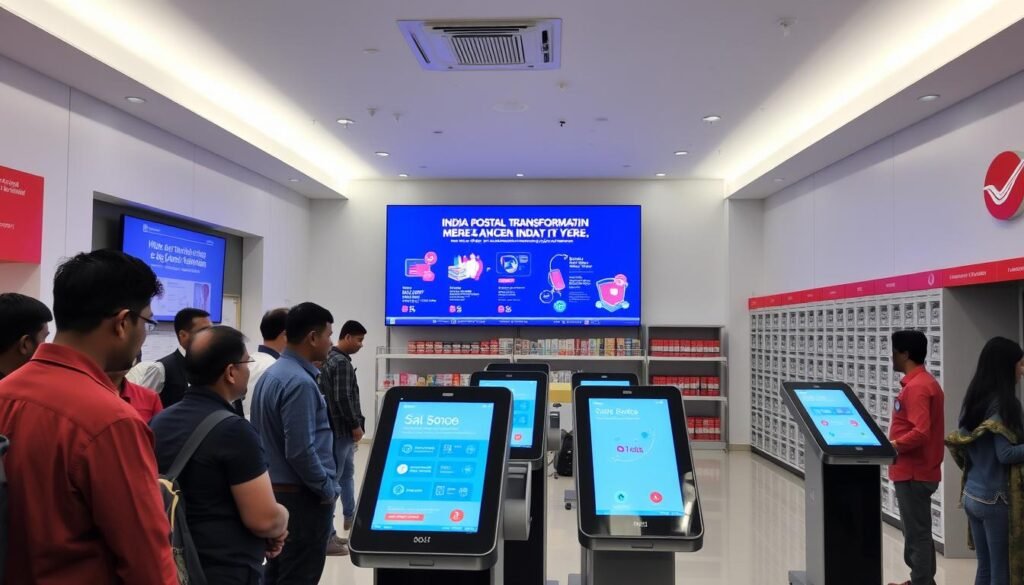
India Post is changing from a simple postal service to a digital powerhouse. This change goes beyond just Digipin. It includes many new services and plans to make the postal experience better.
From Traditional Mail to Digital Services
India Post is moving towards digital services. This means:
Evolution of Core Service Offerings
India Post is adding digital services like e-commerce and digital banking. This is a big change.
Digital-First Approach to Operations
India Post is making its operations more digital. This makes things more efficient and easy for users.
Financial Inclusion Initiatives
Financial inclusion is a big part of India Post’s change. The efforts include:
Banking Services Through Post Offices
Post offices now offer banking services. This helps more people get financial services.
Digital Payment Solutions
India Post is also introducing digital payments. This makes paying bills and sending money easier.
“The integration of digital payment solutions with postal services is a significant step towards financial inclusion.”
Technology-Driven Service Improvements
Technology is key to improving India Post’s services. Some improvements are:
Mobile Applications and Web Portals
Mobile apps and web portals make it easier to use postal services. This is a big help.
Automated Sorting and Processing Systems
Automated systems are making mail delivery faster and more efficient. This is a big step forward.
| Service | Traditional Approach | Modernized Approach |
|---|---|---|
| Mail Delivery | Manual sorting and processing | Automated sorting and processing |
| Financial Services | Limited banking services | Expanded banking and digital payment solutions |
| Customer Access | Physical post offices | Mobile applications and web portals |
Creating and Accessing APIs: Opportunities for Developers
Developers can explore the vast possibilities of India Post’s services through its API. This guide will show how to access India Post’s API. It will also cover developing custom APIs and look at successful examples.
How to Access India Post’s API
Getting into India Post’s API is easy. You just need to register and get your authentication credentials.
Registration and Authentication Process
To register, you’ll give some basic info about your app. Then, you’ll get a unique API key. This key is for authenticating your API requests.
Documentation and Support Resources
India Post has lots of help for developers. They offer detailed documentation, code samples, and forums for support.
Developing Custom APIs for Postal Services
Creating custom APIs for postal services needs a good grasp of technical details. Your APIs must work well with current systems.
Technical Requirements and Specifications
When making custom APIs, follow specific technical rules. This means using standard protocols and keeping data safe.
Integration with Existing Systems
Your custom APIs must link up with existing postal systems. This needs careful planning and execution for smooth integration.
Case Studies of Successful API Implementations
Many have used APIs for e-commerce and government services. These examples show how APIs can boost postal services.
E-commerce Integration Examples
E-commerce sites have used India Post’s API to better their logistics and delivery. This has made delivery faster and customers happier.
Government Service Applications
Government agencies have also used India Post’s API for services like citizen services and admin tasks. This has made processes smoother and services better.
Future Prospects of Digital Addressing in India
India’s digital addressing is getting better with new technology. Advanced tech will shape its future.
Upcoming Features and Enhancements
India’s digital addressing will see big improvements soon. AI and machine learning applications will make it more accurate and efficient.
AI and Machine Learning Applications
AI and machine learning will make finding locations easier. They will also cut down on mistakes, making things better for users.
Blockchain for Address Verification
Blockchain technology will make address verification safe and clear. It will keep the digital addressing system trustworthy.
Integration with Smart Cities Initiative
Digital addressing will work closely with the Smart Cities initiative. This will improve city planning and emergency services.
Urban Planning Applications
It will help in better city planning. Accurate digital addresses will help in using resources well and building better infrastructure.
Emergency Services Coordination
It will also make emergency services better. Quick and effective responses will be possible with accurate addresses.
Global Benchmarking and Best Practices
India’s digital addressing will be compared to the world’s standards. This will help find ways to get better and learn from others.
Comparison with International Digital Address Systems
Comparing with global systems will show what India does well and what it can improve. This will guide future updates.
Lessons Learned and Adaptations
By learning from the best worldwide, India can make its digital addressing better. It will stay competitive and effective.
Conclusion: The Impact of Digipin on India’s Digital Transformation
Digipin has made a big change in India’s digital journey. It has changed the way mail is delivered. Now, mail gets to the right place faster and more accurately.
Digipin has also helped e-commerce and logistics grow. This shows how important it is for modern postal services.
India is moving forward with digital technology, and Digipin is leading the way. It’s making postal services better and more reliable. This is key for India’s digital future.
Digipin is part of a bigger effort to update traditional services. It shows how technology can improve old ways of doing things. As India keeps growing digitally, Digipin will play a big role in its success.
FAQ
What is Digipin and how does it work?
Digipin is a digital postal index number. It gives a unique code to locations. This makes it easier to find and send mail.
How does Digipin improve mail delivery efficiency?
Digipin makes mail delivery better by using precise codes. This cuts down on mistakes and speeds up delivery. It also helps sort and route mail more efficiently.
What are the benefits of using Digipin in rural areas?
In rural areas, Digipin makes mail delivery more accurate. It gives a unique code to each location. This reduces delivery time and errors.
How does India Post’s API work with Digipin?
India Post’s API connects with Digipin. It lets users check addresses, track mail, and see delivery status. This makes it easier to use with online shopping and other services.
What are the privacy implications of using Digipin?
Using Digipin raises privacy concerns. But, there are steps to keep data safe. These include encryption and user consent.
How does Digipin support e-commerce and logistics?
Digipin helps e-commerce and logistics by making addresses precise. This speeds up delivery and reduces mistakes. It also works well with online shopping and COD services.
What is the role of India Post in the development of Digipin?
India Post was key in creating Digipin. They provided the setup and knowledge needed. They worked with tech partners to make it work.
How can developers access India Post’s API?
Developers can get to India Post’s API through the official website. They need to register and then find the API documentation and support.
What are the future prospects of digital addressing in India?
The future of digital addressing in India looks bright. It will use AI, blockchain, and Smart Cities. These will make mail delivery even better.
To see more detail you can go here